Choosing the right door for your home feels like a small decision — until a few years pass. That beautiful wooden door you picked starts to swell in the monsoon, the paint begins to peel, and one day you notice the tell-tale dust of deemak (termites) at the bottom. Suddenly, that “small decision” is costing you real money in repairs and replacements.
So before you buy, it’s worth asking the right question: WPC door or wooden door — which one actually makes sense for a Pakistani home?
Let’s break it down honestly, point by point — backed by real research, not just claims.
Quick Comparison at a Glance
| Feature | WPC Door | Wooden Door |
|---|---|---|
| Waterproof | Does not swell, warp, or rot | Absorbs water, swells & warps |
| Termite (deemak) proof | Not a food source for termites | Highly vulnerable |
| Strength | Stronger than wood & steel | Strong, but weakens over time |
| Weight | Lighter, easy to handle | Heavier |
| Maintenance | Almost none | Regular polishing & repairs |
| Heat resistance | Up to 80°C | Can crack and fade |
| Lifespan | Reported at 20+ years | Shortens with moisture & pests |
| Eco-friendly | Reduces timber use | Contributes to deforestation |
Now let’s look at what these differences really mean for you.
1. Water and Moisture: The Biggest Weakness of Wood
Pakistan’s weather is tough on doors. Between humid summers, monsoon rains, and damp bathrooms and kitchens, moisture is everywhere — and moisture is wood’s worst enemy.
A wooden door absorbs water. Over time it swells, warps, and stops closing properly. In bathrooms and kitchens, this happens even faster.
WPC (Wood Plastic Composite) solves this at the material level. Because the wood fibres are encapsulated in a protective polymer during manufacturing, the material resists moisture and stays dimensionally stable even when humidity changes. In simple terms: WPC doors don’t swell, warp, or rot — which is exactly why the industry recommends them for bathrooms, kitchens, and other wet areas where wooden doors fail.
Winner: WPC — by a wide margin.
2. Termites (Deemak): A Bigger Problem in Pakistan Than You Think
Ask anyone who has owned wooden doors in Pakistan and they’ll tell you the same story: deemak. And this isn’t a small issue — research on termites in Pakistan found that termites damage an estimated 10 to 20% of the wood in Pakistani forests, and go on to attack the wood in cupboards, doors, and buildings across the country. Globally, termite damage and its prevention are estimated to cost billions of dollars every year.
Chemical treatments help for a while, but they’re a recurring cost — and they never fully solve the problem.
WPC doors take the problem off the table entirely. Because the wood fibre is locked inside a polymer structure, there’s essentially nothing for termites to feed on, which is why WPC is recognised as a termite-resistant material for construction. No treatments, no sprays, no hidden damage.
Winner: WPC — this alone is reason enough for many homeowners to switch.
3. Strength and Durability
Good wood is strong — no argument there. But its strength fades as it deals with moisture, temperature changes, and pests over the years.
WPC is engineered to be lighter than natural wood yet stronger than both wood and steel. It resists heat up to 80°C, along with cold and water salinity, without cracking or weakening. Industry market data reports a service life of over 20 years for quality WPC doors — well beyond what an untreated wooden door typically survives in a humid, termite-prone climate.
Winner: WPC for long-term strength.
4. Maintenance: Time and Money You’ll Never Get Back
This is the difference most people underestimate. A wooden door needs ongoing care — polishing, repainting, sealing, and repairs to keep it looking good and working properly. Every year, that’s time and money out of your pocket.
WPC doors, by contrast, do not need periodic painting or anti-rot treatment. A simple wipe with a damp cloth keeps them looking new. Over the lifetime of the door, that adds up to significant savings and far less hassle — a point every industry guide highlights as one of WPC’s biggest advantages.
Winner: WPC — clearly.
5. The Look: Do You Have to Sacrifice Beauty?
Here’s the good news: you don’t. One of the biggest myths is that composite doors can’t match the warmth of real wood.
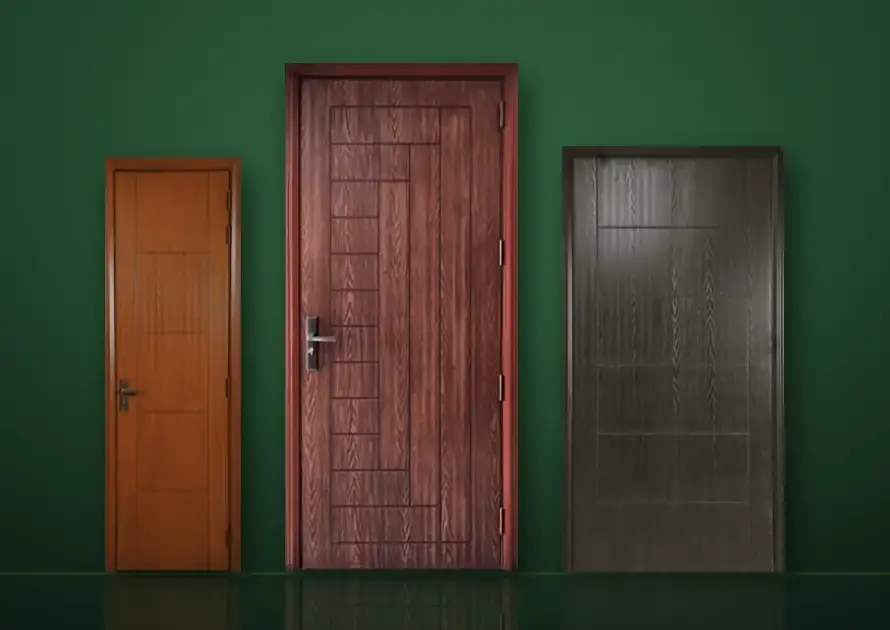
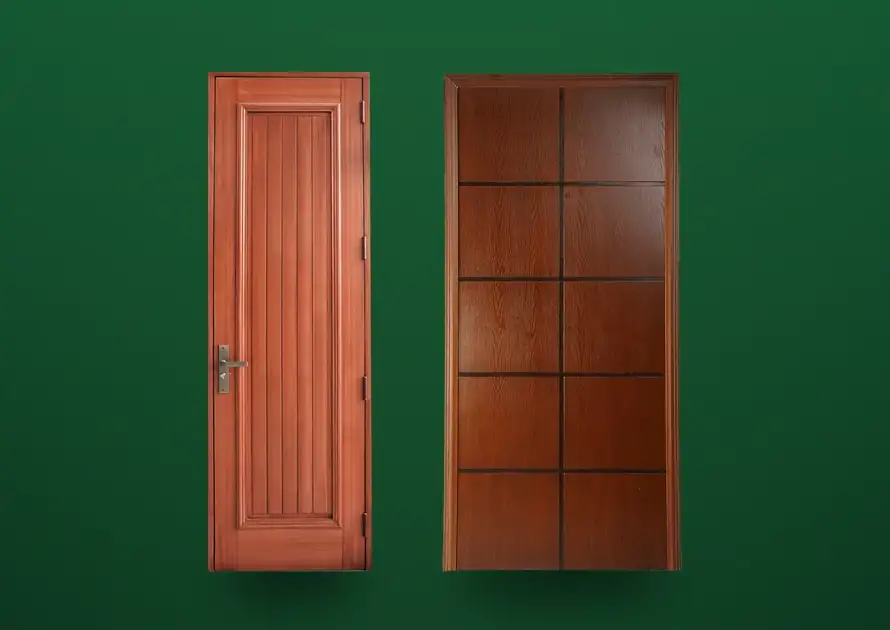
Modern WPC doors come in rich, embossed wood-grain textures and finishes that look and feel like natural timber. Add precision CNC-carved designs, and you get doors that are arguably more elegant than standard wooden ones — with all the durability benefits underneath. As a bonus, many WPC doors achieve zero-formaldehyde emissions, making them safer for indoor air quality than some conventional engineered-wood doors.
Winner: A tie on looks — but WPC keeps that look for years.
6. The Eco-Friendly Angle
Every wooden door adds to timber demand — and Pakistan is already under serious pressure. The country currently produces only around 14 million cubic metres of wood, while demand has been projected to climb toward 50 million cubic metres, a gap that drives deforestation and forest degradation.
Choosing WPC reduces the demand for fresh timber (and many WPC products use recycled wood and plastic), helping protect Pakistan’s forests. For homeowners who care about making a responsible choice, WPC lets you enjoy the beauty of wood without the environmental cost.
Winner: WPC — better for your home and the planet.
So, What’s the Verdict?
Wooden doors have charm and tradition on their side. But when you weigh them against Pakistan’s real conditions — humidity, monsoon, heat, and a serious termite problem — the practical answer becomes clear.
WPC doors give you the natural wood look you want, with the strength, waterproofing, and termite resistance that wood simply can’t offer — and almost none of the maintenance. You pay once and enjoy a door that stays beautiful and solid for years.
If you’re building or renovating a home, office, or commercial space, WPC is the smarter long-term investment.
Ready to Make the Switch?
At Green Doors, we manufacture premium WPC doors that are 100% waterproof, termite proof, and fully customizable in size, design, and finish. As Pakistan’s pioneering WPC door brand — trusted by leading developers like Defence Raya, Master City, and Goldcrest — we help you choose the perfect door for every space.
Contact us today for a free consultation and quote, and let’s build something that lasts.