If you have ever replaced a bathroom door after just two or three years, you already know the problem. In Pakistan, the bathroom and kitchen are the two hardest places in the whole house on a door. Between constant humidity, splashing water, steam, and the occasional bit of seepage from the wall, an ordinary wooden door doesn’t stand a chance. It swells at the bottom, the paint bubbles, the corners start to rot, and sooner or later deemak finds its way in.
So when people search for waterproof doors for bathrooms and kitchens, they are really asking one honest question: which door will I not have to replace again? This guide answers exactly that — no jargon, just what actually works in our climate.
Why bathrooms and kitchens destroy normal doors
It helps to understand what a door in these rooms is actually up against, because it’s more than just “some water.”
- Constant humidity. A bathroom rarely fully dries out. That moisture in the air seeps into wood fibres day and night.
- Standing water and splashes. The bottom few inches of a bathroom door get wet again and again — this is almost always where rot starts.
- Steam. Hot showers and cooking send steam upward, so even the top of the door and the frame take a beating.
- Temperature swings. Wood expands when it’s damp and contracts when it dries. Do that a few hundred times and the door warps and the joints loosen.
- Deemak (termites). Damp wood is an open invitation. Once termites settle in a wet door frame, they spread to the rest of the house.
A door that survives here has to be genuinely waterproof — not just “water-resistant with a coat of paint.”
“Water-resistant” vs “100% waterproof” — know the difference
This is where a lot of buyers get caught out. Many doors are sold as water-resistant, which simply means they can handle a little moisture for a little while. Polished wood, laminated MDF and cheap plywood all fall into this group. They look fine on day one and start failing within a year or two in a wet room.
Waterproof is a different promise altogether: the material itself does not absorb water, so it never swells, warps or rots — no matter how humid the room gets. For a bathroom or kitchen, water-resistant is not good enough. You want a door whose core is genuinely waterproof.
The main door options in Pakistan (an honest comparison)
Here’s a straight look at what’s actually available in the market, and how each one really performs in a wet room.
1. Solid wood doors
Beautiful, and still the first choice for many homes — but the wrong choice for a bathroom or kitchen. Natural wood absorbs moisture, swells, and eventually rots, and it needs regular polishing. In a wet room, even good-quality wood usually gives up within a few years.
2. Plywood / MDF doors
The cheapest option, and the worst for moisture. The moment water reaches the layers or the pressed board, they puff up and crumble. Fine for a dry bedroom; a mistake for a bathroom.
3. PVC doors
A genuine step up for wet rooms — PVC is waterproof and cheap. The trade-off is that PVC doors often feel light and hollow, look plasticky, and can sag or discolour over time. They do the job on a tight budget, but they rarely feel premium.
4. Fibreglass doors
Strong and waterproof, and they last well. The downside is limited design variety and a higher price, and the finish can look industrial rather than warm.
5. WPC doors
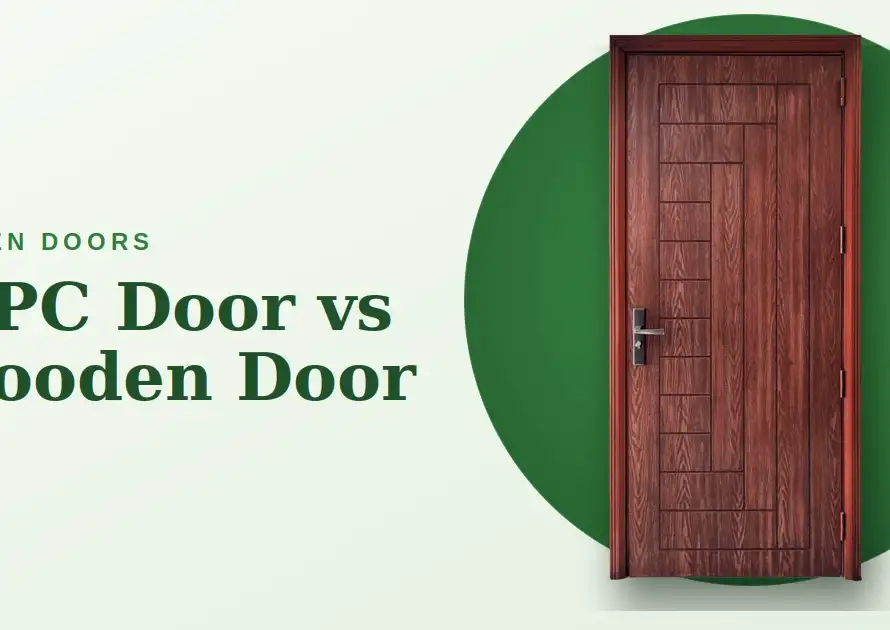
This is where most smart buyers in Pakistan are now heading. WPC (Wood Plastic Composite) combines wood fibre with polymer, so you get the warm look of wood with none of wood’s weaknesses. It is 100% waterproof, fully deemak-proof, and needs no polishing or painting. You can read more about the material itself on Wood Plastic Composite.
Why WPC is the best choice for bathrooms and kitchens
When you line up the options, WPC solves almost every problem these rooms create:
- 100% waterproof. The core doesn’t absorb water, so it never swells, warps or rots — even at the bottom of the door where wood always fails first.
- Deemak and pest proof. There’s nothing in WPC for termites to feed on, so a wet frame no longer becomes a termite highway.
- Handles heat and humidity. WPC stays stable through steam and temperature swings, and resists heat up to around 80°C.
- Looks like wood, lasts like plastic. You keep the natural wood appearance without the maintenance.
- Zero upkeep. No annual polishing, no repainting — a quick wipe is all it needs.
In short, a WPC door is the closest thing to a “fit it and forget it” solution for the two wettest rooms in your home.
What to check before you buy a waterproof door
Not all waterproof doors are made equal. Before you pay, run through this quick checklist:
- Is the core actually waterproof, or just the surface? Ask specifically about the core material, not just the finish.
- Thickness and solidity. Tap the door — a hollow, flimsy feel usually means it will sag over time.
- Deemak protection. For Pakistan, this is non-negotiable in a wet room.
- Ventilation options. Bathrooms need airflow. A jaali or louvre design lets air move while keeping privacy.
- Custom sizing. Bathroom and kitchen openings are rarely standard, so made-to-order sizing matters.
- Warranty and after-sales. A brand that stands behind its product is worth paying a little more for.
Design ideas that work in wet rooms
Waterproof doesn’t have to mean boring. A couple of design choices are especially smart for bathrooms and kitchens:
- Jaali / louvre doors allow constant ventilation, which keeps the room drier and cuts down on that damp smell. Green Doors offers waterproof glass, louvre and jaali doors made specifically for this.
- Glass-panel doors bring natural light into a windowless bathroom or a dark kitchen corner, while a WPC frame keeps everything waterproof.
- Clean, modern finishes in lighter shades make a small bathroom feel bigger and are easy to keep looking fresh.
What about the price?
WPC doors usually cost more than a basic PVC door but less than premium solid wood or fibreglass — and here’s the honest math: because you won’t be replacing a rotted, swollen door every few years, a WPC door almost always works out cheaper over time. You buy once instead of three times. Prices depend on size, design and finish, which is why most buyers simply request a quote for their exact opening.
For a bathroom or kitchen in Pakistan, the door has to beat humidity, splashes, steam and deemak all at once. Plywood and untreated wood can’t. PVC and fibreglass can, but they compromise on looks or feel. WPC gives you a genuinely waterproof, termite-proof, maintenance-free door that still looks like real wood – which is exactly why it has become the go-to choice for wet rooms.
If you want doors built to survive the wettest rooms in your home, explore the full Green Doors range, or contact our team for a free consultation and quote on the right waterproof door for your space.
Frequently Asked Questions
Which door is best for a bathroom in Pakistan?
A WPC door is generally the best choice. It is 100% waterproof and deemak-proof, so it won’t swell, warp or rot in a humid, splash-prone bathroom the way wood or MDF does.
Are WPC doors really 100% waterproof?
Yes. WPC is made from wood fibre blended with polymer, so the core does not absorb water. That’s what allows it to stay stable in bathrooms and kitchens where ordinary wood fails.
Are waterproof WPC doors also termite (deemak) proof?
They are. Because there’s no untreated wood for termites to feed on, WPC doors stay deemak-free — a big advantage in damp rooms where termite problems usually begin.
Is a PVC door or a WPC door better for kitchens?
Both are waterproof, but WPC feels more solid, looks more like real wood and lasts longer. PVC is cheaper but often feels hollow and can discolour over time.
How much do waterproof doors cost in Pakistan?
Prices vary by size, design and finish. Since bathroom and kitchen openings are rarely standard, the simplest approach is to request a free quote for your exact measurements.